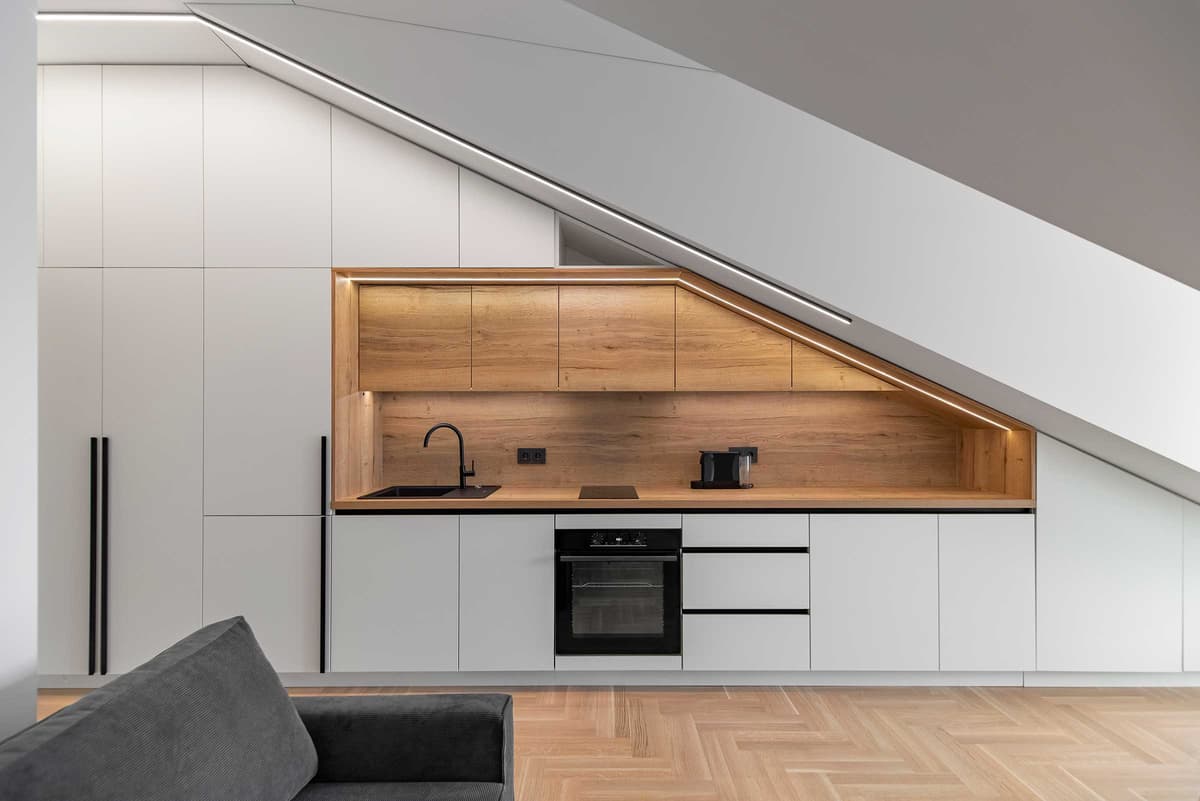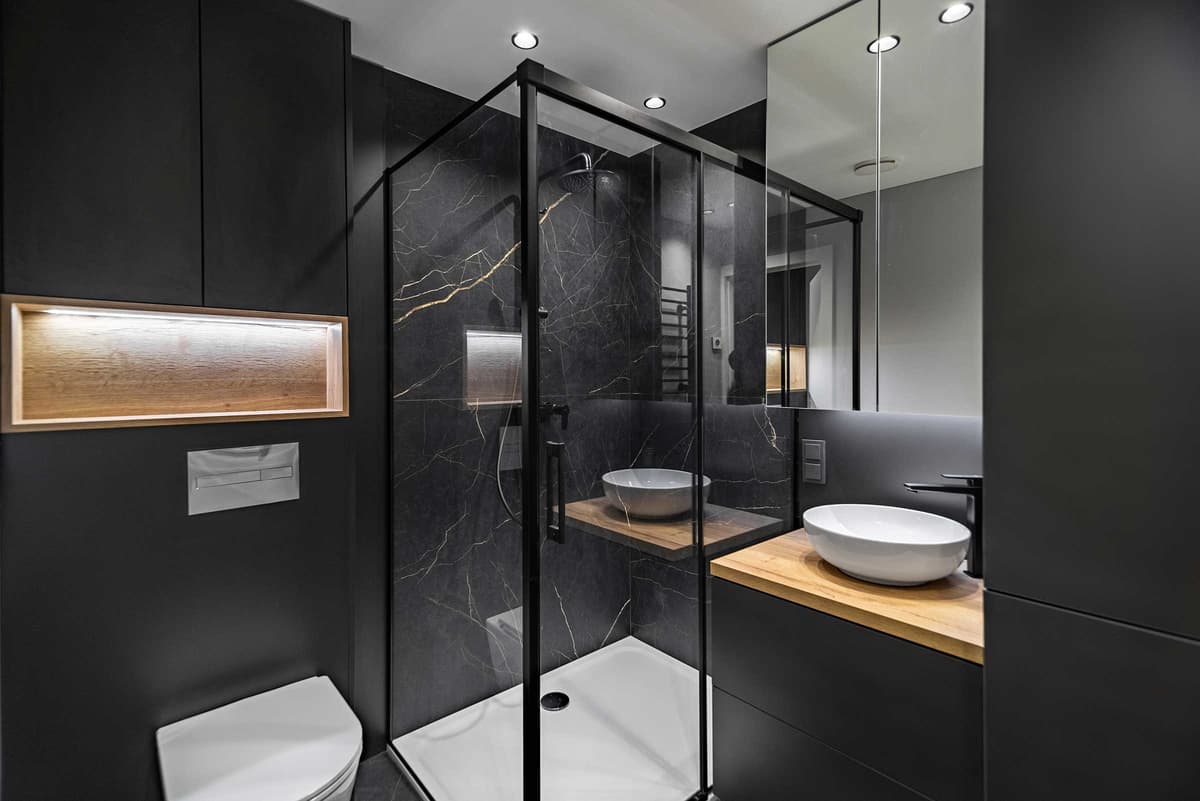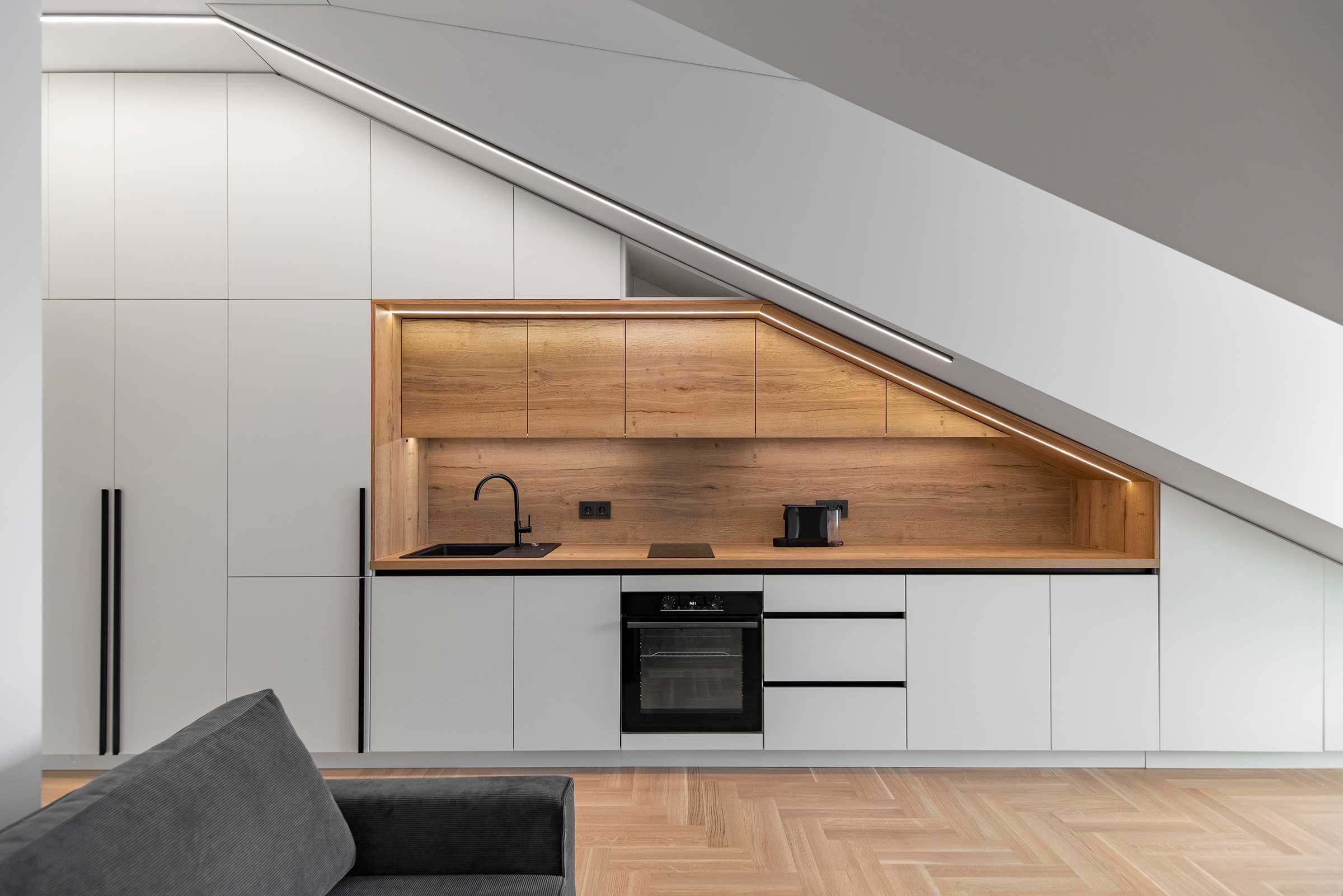
A reference photo is one of the best ways to explain taste. It shows whether you like clean lines, warm wood, painted fronts, open shelves, stone worktops, or hidden handles. But a photo is not a specification. It does not contain dimensions, material codes, site constraints, or installation details.
That is why the question "How much for something like this?" is harder than it sounds. A manufacturer can answer the style. They cannot price the object until the object has size, material, and context.
Why can't a manufacturer quote accurately from a photo?
A photo shows what furniture looks like, but not what it is. It does not show wall length, depth, ceiling height, panel thickness, internal storage, hardware quality, worktop material, or hidden obstacles. Without those details, any price is a guess with a wide error range.
Two kitchens can look similar in a phone screenshot and be completely different projects:
| Hidden variable | Low-cost version | High-cost version |
|---|---|---|
| Wall length | 2.5 m straight run | 5 m L-shape plus island |
| Front material | Melamine | Painted MDF, veneer, or solid wood |
| Worktop | Laminate | Quartz, ceramic, or solid surface |
| Hardware | Standard hinges | Premium drawers, lifts, soft-close systems |
| Site conditions | Straight new-build walls | Old walls, pipes, radiators, uneven floors |
The photo is the beginning of the conversation. It is not enough for the quote.
What can a photo tell the manufacturer?
A photo can tell the manufacturer the style direction, approximate furniture type, visible layout idea, and possible finish category. It can also reveal what the client values: minimal gaps, handleless fronts, open display shelves, thick worktops, integrated lighting, or traditional details.
This is useful information. It helps the manufacturer understand the desired result. It does not answer the questions required for pricing: how many panels, how many metres of edge banding, how many drawers, which hardware, how much worktop, and how difficult the installation will be.
What can a photo never tell the manufacturer?
A photo cannot tell real dimensions, wall accuracy, room depth, ceiling height, material brand, board thickness, hidden services, or the quality level behind the visible surface. It also cannot say how many rooms, how many repeated units, or how urgently the project must be installed.
The biggest missing details are usually:
- Wall length.
- Available depth.
- Ceiling height.
- Door and window positions.
- Radiators, sockets, pipes, beams, or sloped ceilings.
- Whether the furniture is for one home, one hotel room, or fifty repeated rooms.
The manufacturer needs those facts before a price can be calculated responsibly.
What is the 3-minute fix?
The 3-minute fix is a quick enquiry format: send the reference photo plus three basic measurements, three room photos, visible obstacles, and one sentence about how the furniture will be used. It turns a photo-only message into a quotable enquiry.
Do this before sending the request:
- Measure the wall length where the furniture will sit.
- Measure available depth from wall to walkway or opposite wall.
- Measure ceiling height.
- Take one wide photo of the room and one photo of each relevant wall.
- Note obstacles: pipes, sockets, radiators, beams, windows, doors.
- Write the use case: "wardrobe for two people", "daily-use family kitchen", or "hotel room desk and wardrobe".
That is enough to move from "nice photo" to "rough budget range possible".
How does this change quote speed?
When the manufacturer receives only a photo, the next step is not quoting. The next step is asking questions. When the manufacturer receives a photo plus measurements and context, the first response can move toward budget, feasibility, and material options.
| Enquiry | Manufacturer response |
|---|---|
| Photo only | "Please send dimensions and room photos." |
| Photo plus rough wall length | Very broad budget range |
| Photo plus three measurements | Useful budget range and next questions |
| Measurements plus material direction | Strong first quote path |
| Measurements plus drawings | Fastest quote path |
The difference is not magic. It is simply fewer missing facts.
Why is a rough price dangerous without measurements?
A rough price without measurements can anchor the client to the wrong number. If the manufacturer says "around EUR 5,000" before knowing that the wall is longer, the worktop is premium, or the room needs custom fitting, the final quote feels unfair even if the calculation is correct.
This is why good manufacturers avoid pretending. A responsible first answer is often: "Based on that style, projects range widely. Send three measurements and we can narrow the range."
What if I cannot measure accurately?
If you cannot measure accurately, send approximate dimensions and label them as approximate. That is still more useful than no dimensions. For fitted furniture, a final survey or 3D scan should happen before production, because production drawings cannot rely on rough measurements.
Approximate numbers are good for early budgeting. Verified dimensions are required for manufacturing.
What should B2B clients send instead of a photo?
B2B clients should send drawings, quantities, a furniture schedule, material direction, project location, and programme dates. A reference image is still welcome, but the commercial quote depends on repeat counts, room types, site access, required durability, and installation windows.
For hotel, office, restaurant, or multi-unit projects, the manufacturer should not be forced to infer quantities from mood boards. A mood board shows design intent. A furniture schedule shows what must actually be made.
Frequently Asked Questions
Can a manufacturer give a budget from only a photo?
They can give a very broad range, but it will not be reliable. A kitchen photo might represent a small melamine project or a premium kitchen with an island, expensive hardware, and stone worktops. The range is often too wide to help.
Are AI-generated furniture images useful for quotes?
They are useful for style direction, but they can be misleading for manufacturing. AI images often show impossible proportions, unsupported spans, unclear materials, and details that do not connect to real hardware or joinery. Treat them as mood references, not specifications.
What are the minimum three measurements?
The minimum three measurements are wall length, available depth, and ceiling height. For wardrobes, also note door swing and window or radiator positions. For kitchens, note appliance positions, plumbing, sockets, and whether worktops or appliances are included.
Is a 3D scan better than client measurements?
Yes, for fitted furniture. Client measurements are useful for the first quote, but a 3D scan or professional site survey is better before production. It captures walls, floors, ceilings, and obstacles that a tape measure can miss.
Why does the manufacturer ask questions instead of giving a price?
Because those questions protect the client from a false quote. If size, material, and site conditions are unknown, the manufacturer is not pricing a project. They are pricing assumptions. A short question round creates a more honest number.
What sources support this guidance?
This article is based mainly on FurniOx internal enquiry and manufacturing notes. For dust and cutting context, the UK Health and Safety Executive explains why wood dust must be controlled at woodworking machines: https://www.hse.gov.uk/woodworking/wooddust.htm